No courses available.
2025 Purkayastha, A. and Dey, S. (2025) Screening Indigenous Medicinal Plants for Broad-Spectrum Antimicrobial Activity Against Nosocomial Infections: A Mini Review. In Baruah, M. and Nath, S. (Eds.) Botanica Plantscia: A Book on Plant Science and its allied subjects. Chhattisgarh. Evincepub Publishing, pp. 162-178.
2024 Purkayastha, A., Hazarika, K., Gogoi, T., Boruah, J., Saikia, P., Dutta, A., Gogoi, J., & Dutta, N. (2024). From tradition to modernity: The therapeutic value and global impact of medicinal plants. In N. Borgohain, M. Konwar, & R. Hazarika (Eds.), VERITAS: A multidisciplinary research anthology (1st ed., pp. 140–159). Moran College Teachers’ Unit.
2023 PUBLICATION IN JOURNALS: Ethnomedicinal plants of the Tai Phake tribe of upper Brahmaputra valley in Assam, India”- authors- Mamoni Phukan Borgohain, Robindra Teron and Ajit K Tamuli; Pleione 10(1): 123-133, 2016, ISSN: 0973-9467.
2023 2. Variation of ethnomedicinal knowledge among Tai Phake of upper Assam region, Northeast India, authors- Mamoni Phukan Borgohain, Robindra Teron and Ajit K Tamuli, Journal of Traditional knowledge and Folk Practices, vol- 06 (1), June 2018, 26-38, ISSN : 2278-5906.
2023 Ethnobotanical study of Tai Tribe with special reference to Tai Phake of North-East India”. Authors- Mamoni Phukan Borgohain and Robindra Teron, Bimirsha, collection of research papers, edited-Alpona Gogoi Bhuyan, ISBN-978-81-928247-0-3, Golden Jubilee, Moran College, pp-114.
2023 4. Importance of Medicinal Plants among Tai Tribe with special reference to Tai Phake of North-East India”. Proceeding of National seminar, Uttar Guwahati College, page-116-122, ISBN: 978-81-931525-0-8.
2023 5. Poster presentation on Promising Role of Medicinal plants used by the Tai Phake: Insight from Ethnobotanical studies and Preliminary Phytochemical Screening , International Conference- Dibrugarh University, Nov. 2015.
2023 6. Poster Presentation on Conservation of Plant resources in Home garden and Monasteries of the Tai Phake of upper Brahmaputra valley, Assam, International conference of Assam Botanic Congress, Gauhati University, Assam, Feb. 2019.
2023 7. Natural Dyes and Textile as Cultural Marker: A Study among the Tai Phake of Upper Assam, Northeast India, authors- Mamoni Phukan Borgohain, Robindra Teron and Ajit K Tamuli, Bulletin of Arunachal Forest Research, Vol-33(2), pp 36-44, 2019.
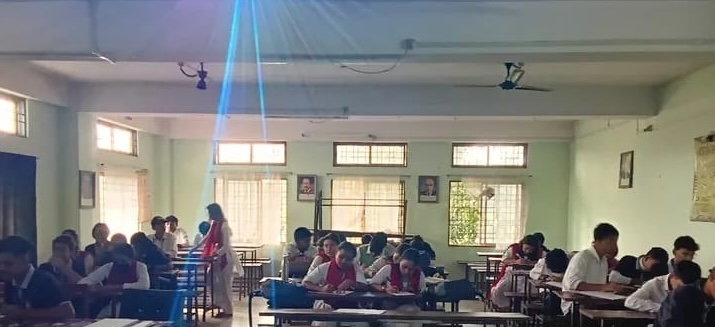
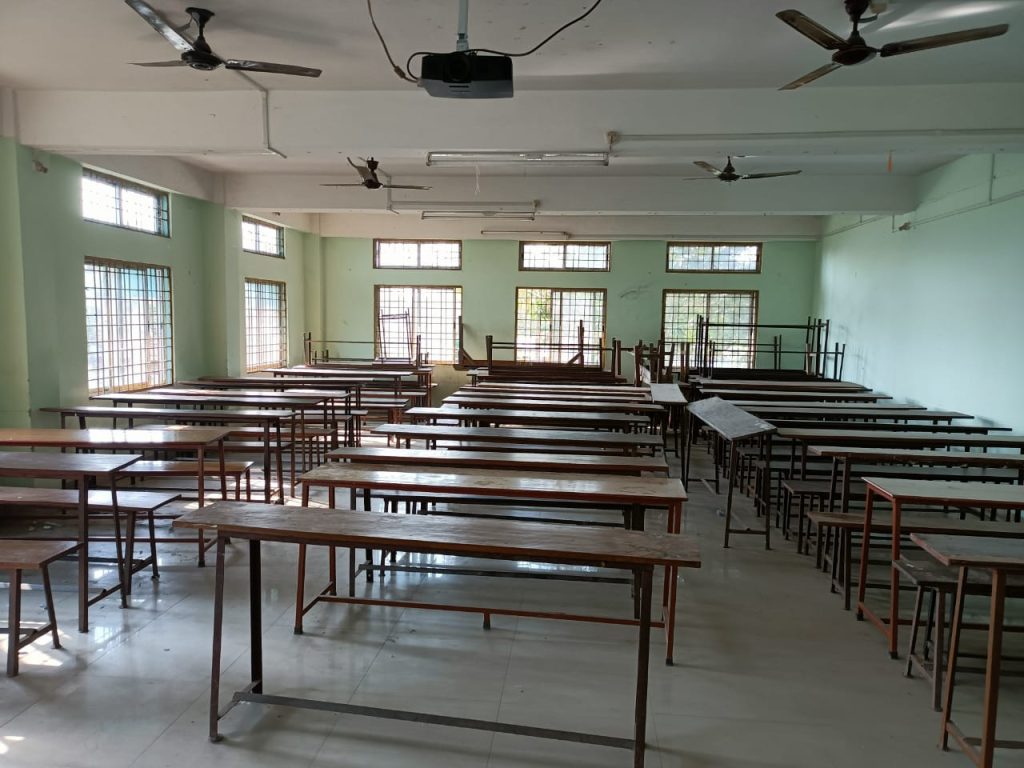
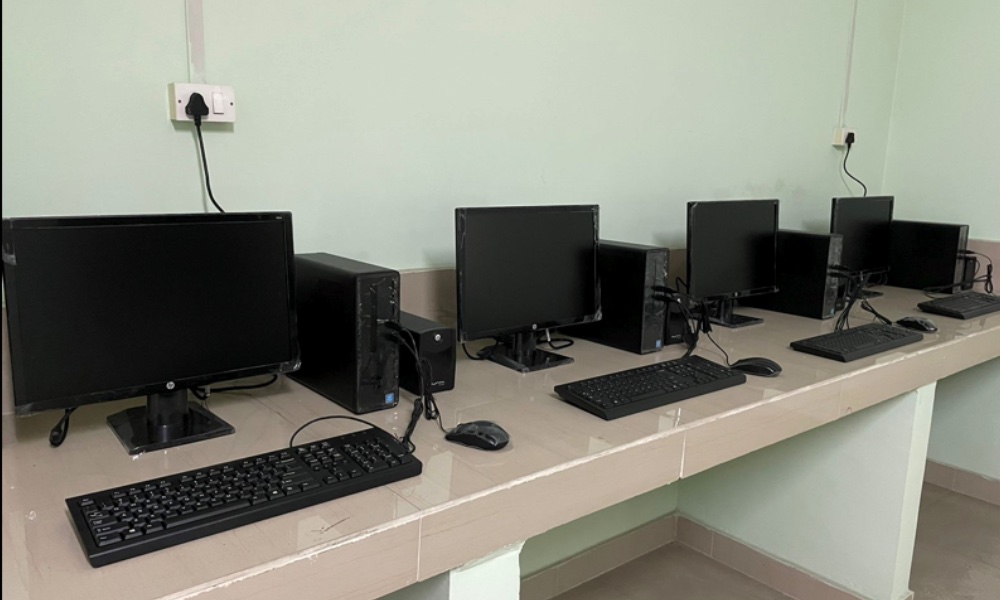
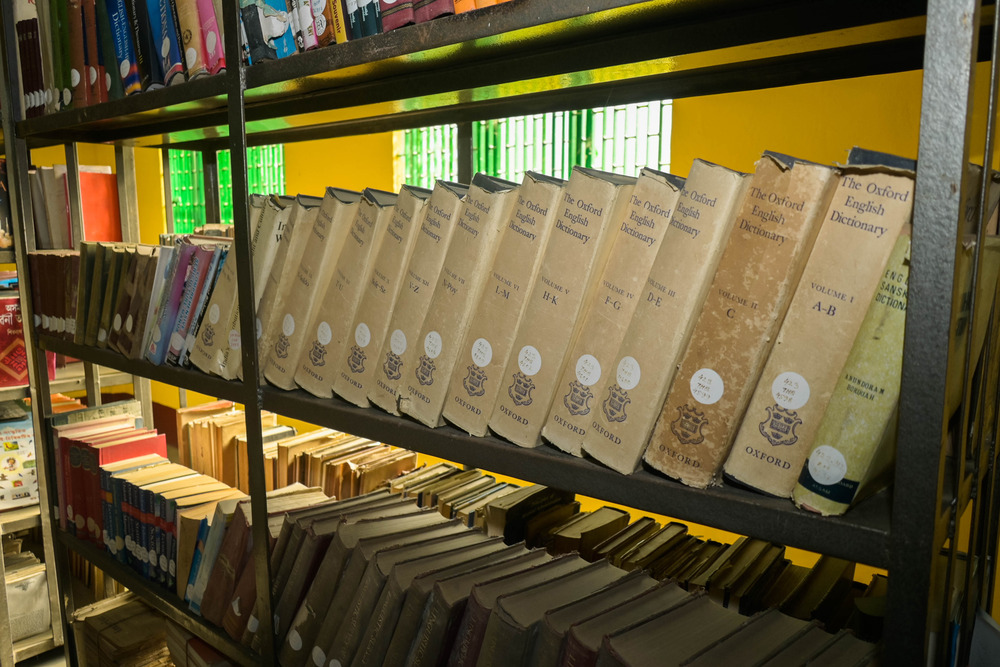
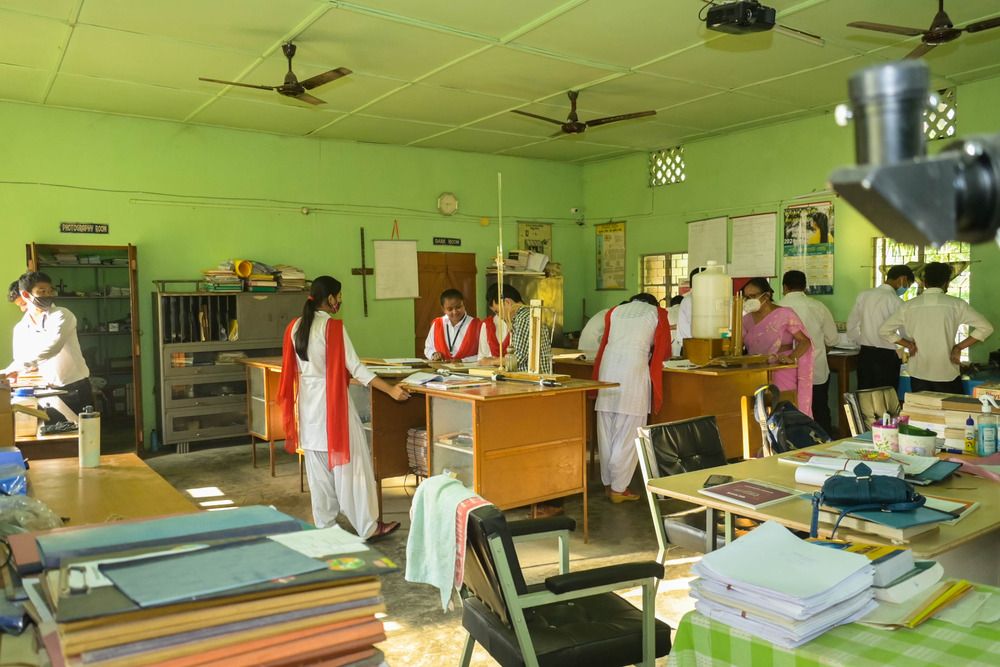
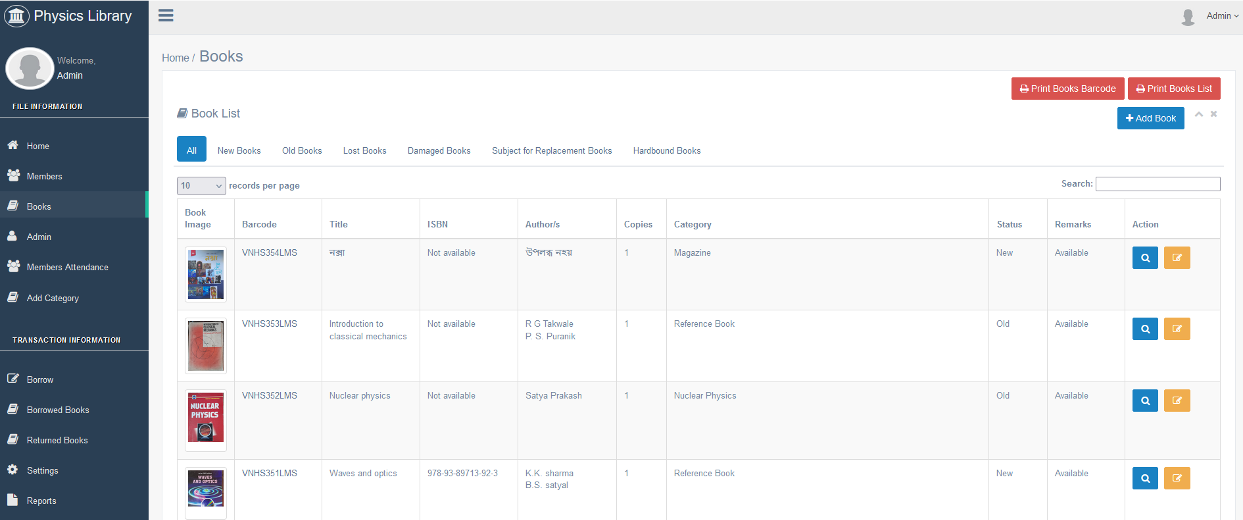
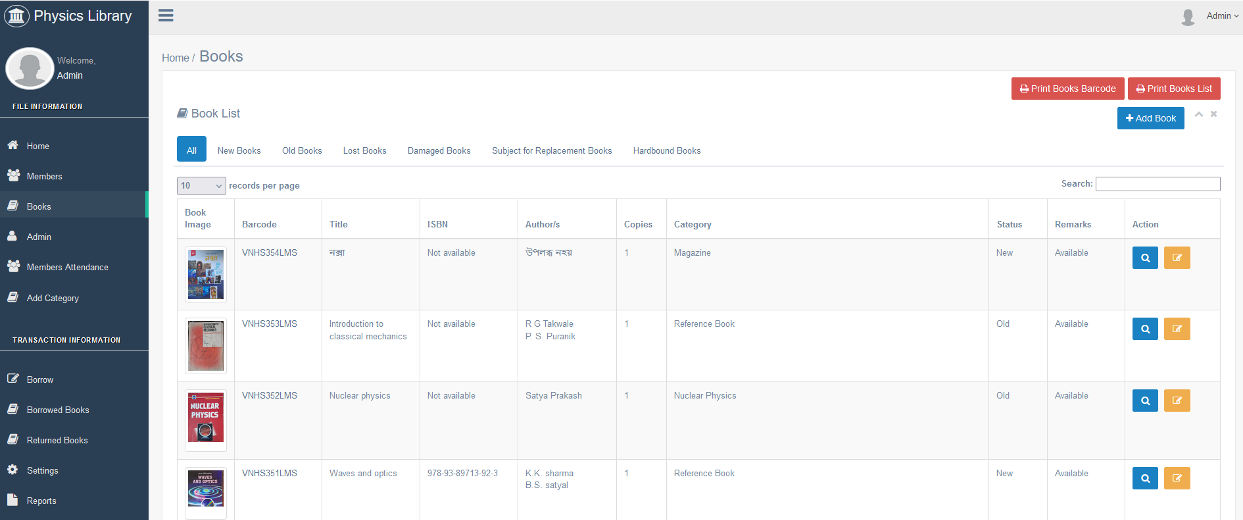
The Department of Physics has developed a comprehensive digital academic ecosystem that integrates library automation, learning management systems, and skill-oriented add-on courses to enhance transparency, accessibility, and student engagement.
A key feature of this initiative is the fully automated Departmental e-Library equipped with an Online Public Access Catalogue (OPAC). Students can access the catalogue digitally, scan QR codes to explore available resources, and manage book issuance, return, and fine records online. This ensures efficient resource management and promotes independent learning habits.
The department also uses the Moodle Learning Management System (LMS) for real-time attendance tracking and academic resource sharing. Attendance is recorded digitally, allowing students to monitor their own attendance status transparently. Course materials, lecture notes, assignments, and announcements are shared through Moodle, creating a centralized and structured learning environment.
To bridge the gap between physics and emerging technological demands, the department offers add-on courses in Information Technology and programming. These courses equip students with computational and analytical skills, enhancing their employability and research capabilities.
This integrated digital approach ensures academic transparency, student empowerment, skill development, and efficient academic administration, making it a distinctive best practice of the Department of Physics.
Our students and faculties stand out with exceptional achievements and professional excellence.
No student records found.
The Department follows a strict zero-tolerance policy against ragging as per the guidelines of the University Grants Commission (UGC). Any student experiencing or witnessing ragging (physical, verbal, psychological, or online) should immediately report the matter to:
Complaints may be submitted in writing or via the official helpdesk email. All complaints will be treated confidentially, and strict disciplinary action will be taken against offenders.
For all committees Please Visit: Click HereComplaints related to sexual harassment should be submitted to the Internal Complaints Committee (ICC) constituted under the Sexual Harassment of Women at Workplace (Prevention, Prohibition and Redressal) Act, 2013.
The identity of the complainant will be kept strictly confidential, and due process will be followed as per legal provisions.
For all committees Please Visit: Click HereStudents facing issues related to attendance, internal assessment, examinations, facilities, or other departmental matters may approach:
Written complaints may also be submitted through the official department helpdesk email. The department ensures timely and transparent resolution of grievances.
For all committees Please Visit: Click Here
Site Map
Contact Directory
Feedback
FAQ
NIRF Report
Women’s Cell
Photo Gallery
College Prospectus
Moranhat, Charaideo, Assam, PIN-785670
03754-226179, 229057
principal@morancollege.com
© Copyright 2020 Moran College. All rights reserved. Designed, Developed & Managed by Dr. Pragyan Phukan